20 Top Tips On Global Health and Safety Consultants Software
Wiki Article
The Complete Safety Ecosystem By Bridging On-Site Assessments With Digital Innovation
For many decades, health safety management was conducted in two different realms. There was the physical world that was the workplace, with all the noise, dust, the moving machinery, the tired workers making snap-of-the-brain decisions, and then there was an online world full of reports, spreadsheets and compliance files kept in offices far away. They rarely exchanged information. Assessments on site produced paper that was later converted into digital data however by the time that was over, the environment had changed, and the workers were moving on and the knowledge was in a state of decay. The safety and security ecosystem in its entirety represents the breakdown of this line of separation. It's not just about digitizing procedures on paper, but about integrating digital intelligence into physical processes, so that each hammer smack each near miss, every safety dialogue generates information that improves the next moment's safety. This is an ecosystem view, and it changes everything.
1. The Ecosystem Covers Everything, Not Just Safety Systems
A real safety ecosystem doesn't exist in isolation from other business software, but it connects to them. It pulls information from HR systems concerning training completion and new hire induction. It also integrates with maintenance schedules in order to assess risk profiles for equipment. It works in conjunction with procurement to verify the safety of suppliers before agreements are made. When there are on-site reviews, consultants and auditors see not only a few safety statistics, but the entire operational picture. They know which equipment is due for service, which workers have been recently replaced, and which contractors have a poor track record elsewhere. This holistic view transforms the assessments of snapshots into richly contextualised insight.
2. On-Site Assessors Turn into Data Nodes. They are not Data Entry Clerks
In traditional models, the on-site assessor's primary job was data collection--observing conditions, interviewing workers, recording findings for later analysis elsewhere. In the full ecosystem, assessors are data nodes connected to living networks. They provide real-time displays that are accessible to management or safety committees as well as executives simultaneously. The finding of inadequate guarding on a brake does not have to wait for a report to be written and distributed as it shows up immediately on the maintenance manager's priority list as well as the plant manager's weekly report. The assessor stays in the loop, consulted as findings get addressed, rather than disregarded after the report is submitted.
3. Predictive Analytics shifts the focus on the Future, not just the past
Ecosystems that blend historical assessment data with operational data provide abilities to make predictions that are not possible in siloed systems. Machine learning models are able to identify trends that lead to incidents, such as certain combinations of circumstances, specific times of the day, specific crew compositions that human observers may miss. When consultants conduct assessment on the spot and assessments, they're equipped with these forecasts, knowing where the probability of risk will be greatest and focusing their on that area of the risk. The evaluation shifts from documenting what's happened before to preventing what can be the next thing to happen.
4. Continuous Monitoring replaces periodic checking
The idea of the "annual assessment" will be obsolete in a whole ecosystem. Sensors, wearables, and connected tools give continuous streams of relevant safety data, including air quality measures, equipment vibration patterns, location of workers and moving, noise levels temperature, humidity. Assessments on the spot by humans are vital but change their purpose: instead of reviewing conditions at a specific point in time, assessors evaluate patterns in continuously collected data by analyzing anomalies, verifying the accuracy of sensor readings, and looking into how people are impacted by the data. The pace shifts from regular checks to continuous.
5. Digital Twins Enable Remote Assessment and Planning
Digital twins in modern ecosystems comprise virtual replications of actual workplaces that reflect real-time conditions. Safety personnel can tour the facilities from the comfort of their homes, checking digital representations that show current equipment status, recent incidents, ongoing repairs, and worker actions. This was a huge benefit in the face of travel restrictions for pandemics, but is of great value to international organizations. Consultants are able to conduct preliminary assessments remotely and deploy on site only when physical presence creates the value of their presence. Travel budgets stretch further as response times diminish, while expertise is able to reach more locations quicker.
6. Worker Voices are directly integrated into Assessment Data
The biggest issue with traditional safety assessments has always been from the worker perspective. By the time observations reach assessors, they have passed through multiple filters--supervisors, managers, safety committees--that smooth away discomfort and dissent. Complete ecosystems include the direct channels for worker input and mobile apps to report issues in a safe and anonymous manner, hazard reporting that is integrated within assessment work flows, as well as examination of safety conversation patterns that are gathered during team meetings. When assessors show up on-site they are already aware of what employees have been talking about so they can confirm patterns and investigate further on known issues, rather that starting all over again.
7. Assessment Findings Auto-Populates Training and Communication
When a system has been isolated an evaluation finding about inadequate forklift safety could lead to a recommendation for training. An individual then has to schedule that training, notify those who are affected, monitor the performance, and confirm its efficacy. All distinct tasks that require effort. In an ecosystem that is complete, assessment findings trigger automated workflows. When an assessor finds that there is a pattern of forklift misses, the system automatically identifies those who are at risk and schedules refresher classes, include safety issues for forklifts into any toolbox talk agenda and informs supervisors to enhance their observations. The data does more than appear in a document; it spurs action across the linked systems.
8. Global Standards Adapt to Local Reality through feedback loops
The safety standards for the world are frequently ineffective due to their centralization and imposed locally without adjustment. The complete ecosystems produce feedback loops to solve the issue. When local assessors apply global software frameworks, the results or modifications and workarounds feed back to central standard-setters. Certain patterns emerge. This can cause problems in tropical climates. and since control measures are not available for certain regions. This terminology can be confusing for workers working across different sites. Central standards change based on this operational intelligence, and become more robust and more appropriate with each assessment cycle.
9. Verification becomes continuous rather than Periodic
Regulators, insurers, and corporate auditors have historically relied on periodic verification--inspecting records at fixed intervals to confirm compliance. Complete ecosystems facilitate continuous verification through secure, permissive access to live data. Members with permission can check current safety status, latest assessment findings, and corrective actions progress without having to wait long for the reports of the year. This transparency builds trust and reduces audit burden, as continuous visibility eliminates the need for many periodic inspections. Organizations demonstrate their safety through regularly scheduled activities instead of sporadic inspections for auditors.
10. The Ecosystem is Expanding Beyond Organizational Boundaries
These mature safety networks eventually go beyond the company itself to include suppliers, contractors customers, suppliers, and the communities around them. If on-site assessments are carried out they will take into consideration not just the safety of employees, but also public safety along with environmental impact and the connections between supply chain. Data shared securely across organisational boundaries enables coordinated risk management--construction sites know when nearby schools have activities that affect traffic patterns, manufacturers know when suppliers have safety issues that might disrupt production, communities know when industrial activities create temporary hazards. The ecosystem is fully including all who are affected by an organization's activities and not only those who are on its payroll. Follow the best health and safety consultants near me for blog info including fire protection consultant, safety precautions, jobsite safety analysis, occupational health and safety specialist, risk assessment, hazards at work, industrial safety, safety hazard, worker safety training, health and safety jobs and top health and safety software for website advice including occupational health and safety careers, occupational health services, safety at construction site, occupational health and safety jobs, office safety, safety report, occupational health & safety, occupational health and safety specialist, work safety, safety meeting and more.
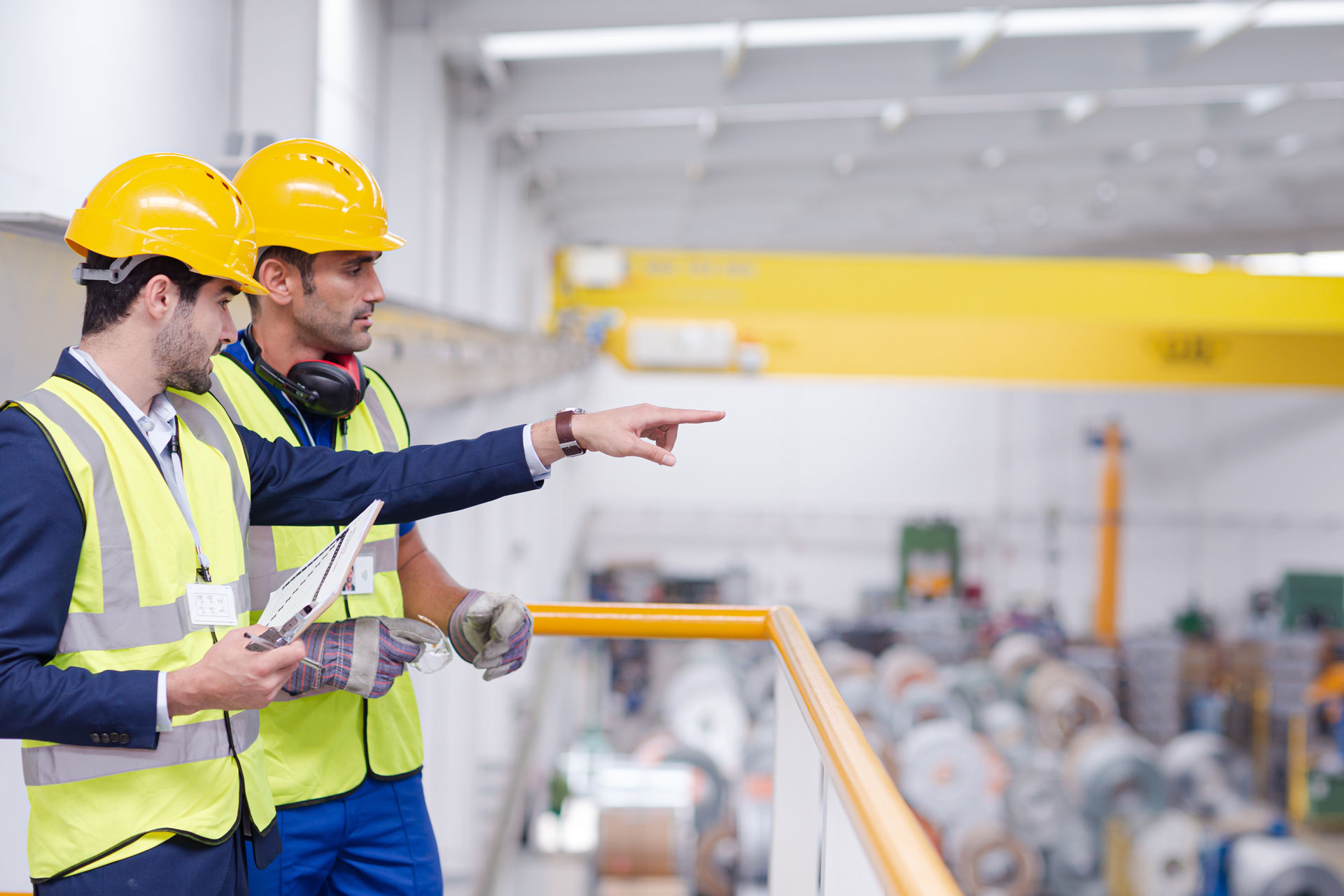
"The Future Of Workplace Safety: Integrating On-The-Ground Expertise With Global Tech Solutions
The safety field is at a turning point. Through the course of a century, improvement involved better engineering controls more thorough training, as well as more rigorous enforcement. These practices are still crucial but they've gotten to lower returns in many fields. The next step will take place not from one invention, but rather from the combination of two competencies that have evolved in isolation for decades by the deep and innate wisdom of experienced safety experts who understand specific workplaces, and the power of analysis offered by global technology platforms that are able to handle massive amounts of data and discover patterns that are unnoticed by any individual observer. This isn't about replacing human judgment with machine learning. It's about enhancing the human judgement with machine intelligence so that the safety expert on the ground will be more efficient, intelligent, and more influential more than before. It is the new reality of work safety will be to those who can combine these two worlds seamlessly.
1. It is not possible to achieve Purely Technological Approaches
The technology industry frequently declared that software would be the only solution to solve workplace safety. Sensors could identify hazards or dangers, algorithms would detect incidents as well as artificial intelligence will inform workers of what to do. These promises have been repeatedly shattered because safety is a fundamentally human issue. It involves human behaviour, human judgement, human relationships and human outcomes. Technology has the ability to help and inform, but it cannot replace the specialized knowledge that an skilled safety professional can bring into a complex work environment. Integration is the future rather than replacement.
2. The Limits of Purely Human Approaches
Similarly, human-centered strategies have reached their limit. Even the most skilled security professionals are able to see enough, recall many things, and connect multiple dots. Human judgement is subject to fatigue, bias as well as the limitation of individual perspectives. Each person cannot hold in their head the patterns that emerge across multiple websites or the most important indicators that have preceded incidents elsewhere, as well as the regulatory changes that affect the industries they don't adhere to. Technology can extend human capability beyond those limits that are inherent to us, providing memories, pattern recognition as well as global visibility, which enhance rather than substitute professional judgment.
3. Predictive Analytics suggests where to Look
One of the most effective applications of combined capabilities is predictive analytics that informs the experts on the ground about where to focus their efforts. The software analyses historic incident data, near miss reports, audit findings, and operational indicators to find locations, activities, and factors that increase risk. The safety specialist then examines the predictions using an innate sense of what those numbers mean. What are the real risks being predicted? What is the root cause behind these risks? Which interventions are appropriate given the constraints of the locale and culture? The technology provides the information; the human decides.
4. Wearables and sensors create continuous Data Streams
The emergence of wearable devices and environmental sensors generates continuous streams of important safety-related data that no human could collect. Heart rate variation indicates fatigue. Quality of the air measurements that identify hazardous exposures. Location tracking allows for the identification of unauthorised access to potentially hazardous areas. Motion sensors detecting slips or falls. Platforms across the globe aggregate this information across sites and regions and identify patterns that require special attention from humans. On-the ground experts analyze the data the sensor readings, verifying their accuracy, knowing the context, and making the most appropriate response. Sensors collect data The humans interpret the interpretation.
5. Global Platforms Allow Local Benchmarking
Safety professionals have often wondered how their performance compares to others, but reliable benchmarks weren't readily available. Global platforms for technology change this by collating anonymised data across different industries and regions. Safety managers in Malaysia can now assess how their incident frequency the results of audits, as well as most important indicators compare with similar facilities in their area as well as globally. This data helps prioritize priorities and helps justify resource requests. When local experts can prove that their performance lags regional peers, they gain advantages for investing. When they are leading in their field, they can gain credibility and acknowledgement.
6. Digital Twins Allow Remote Expert Consultation
Digital twin technology creates virtual copies of workplaces in real time that are updated continuously--is enabling a completely new system of expert advice. If an on-site safety officer confronts a complicated issue they can connect remotely with global subject matter experts who can look into the digital mirror, evaluate relevant data, and offer recommendations without the need to travel. This makes it easier to access information, allowing facilities that are located at remote locations and developing economies to benefit from expert knowledge that would otherwise not be available or affordable.
7. Machine Learning Identifies Leading Indicators
Traditional safety metrics are completely sagging. They reveal what's happened. Machine learning combined with datasets is increasingly capable of identifying indicators to predict future accidents. Modifications in the pattern of reporting near-misses. Variations in the types of observations taken during safety walks. Changes in the duration between identification of hazards and correction. These indicators with the most significant, as identified by algorithms, are key points for ground experts and can identify the cause driving these changes and intervene before the occurrence of incidents.
8. Natural Speech Processing Extracts Information from unstructured data
The vast majority (if not all) of security-related data is available in unstructured form, for example, investigation reports, safety meeting minutes, notes from interviews emails and discussions. Natural language processing technology within integrated platforms allow for the analysis of these documents at a massive scale by identifying common themes, emotion shifts, and emerging concerns that no human reader could be able to aggregate. When software notices that people from various sites are complaining about the same thing an individual procedure It alerts regional and worldwide experts to look into whether the procedure needs changes rather than just local enforcement.
9. Training is personalised and adaptable
The combination of local expertise coupled with global technology can provide training that is tailored to preferences of each employee. The platform monitors each worker's roles, experiences, incident timeline, and even the completion of their training. If certain patterns point to specific knowledge gaps--workers in certain roles repeatedly participating in specific kinds or incidents--the system will recommend specific training strategies. Local experts look over these recommendations in adjusting them to the context, then supervise the training. The training is continuous and customized instead of a series of generic and periodic that addresses actual needs rather than the assumed requirements.
10. The role of the Safety Professional enhances
Perhaps the most important outcome of this merger is the reshaping responsibility of safety professionals. With no data collection or reports generation tasks that software handles better, local experts are able to focus their attention on more profitable tasks like building relationships with workers, understanding the operational reality making effective interventions and influencing the organizational culture. Their opinion is more valuable since it is based on details they could not have collected on their own. Their opinions are more dependable because they are grounded in facts that go beyond personal experiences. The new safety professional in the workplace isn't in danger from technology but empowered by it - more experienced, more influential and more efficient than before. Take a look at the top rated health and safety audits for more recommendations including workplace safety, health and safety and environment, on site health and safety, health hazard, health and safety and environment, site safety, workplace safety, safety meeting, hazards at work, smart safety and more.
